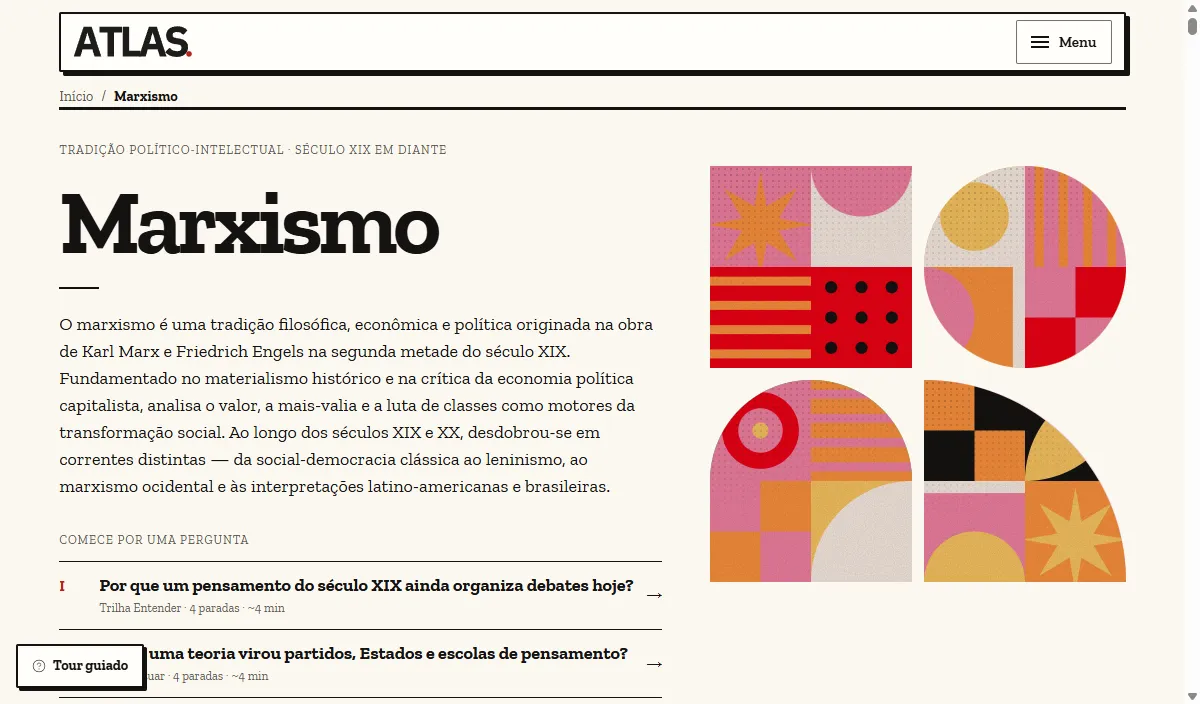
OPEN KNOWLEDGE · KNOWLEDGE GRAPH
ATLAS
History as a navigable network, with the source beside every claim.
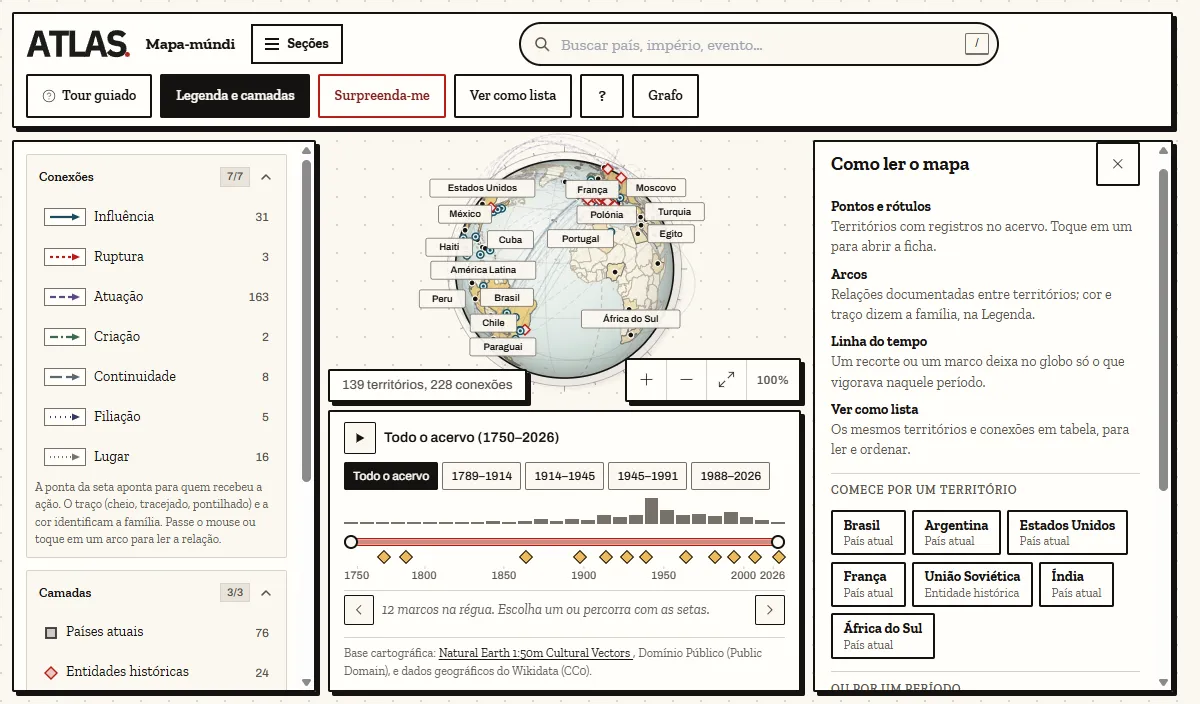
A visual, interactive encyclopedia of history, politics, economics and society. People, works, concepts and events form one typed knowledge graph that every screen reuses: long-form readings, permanent entries, timelines and network views.
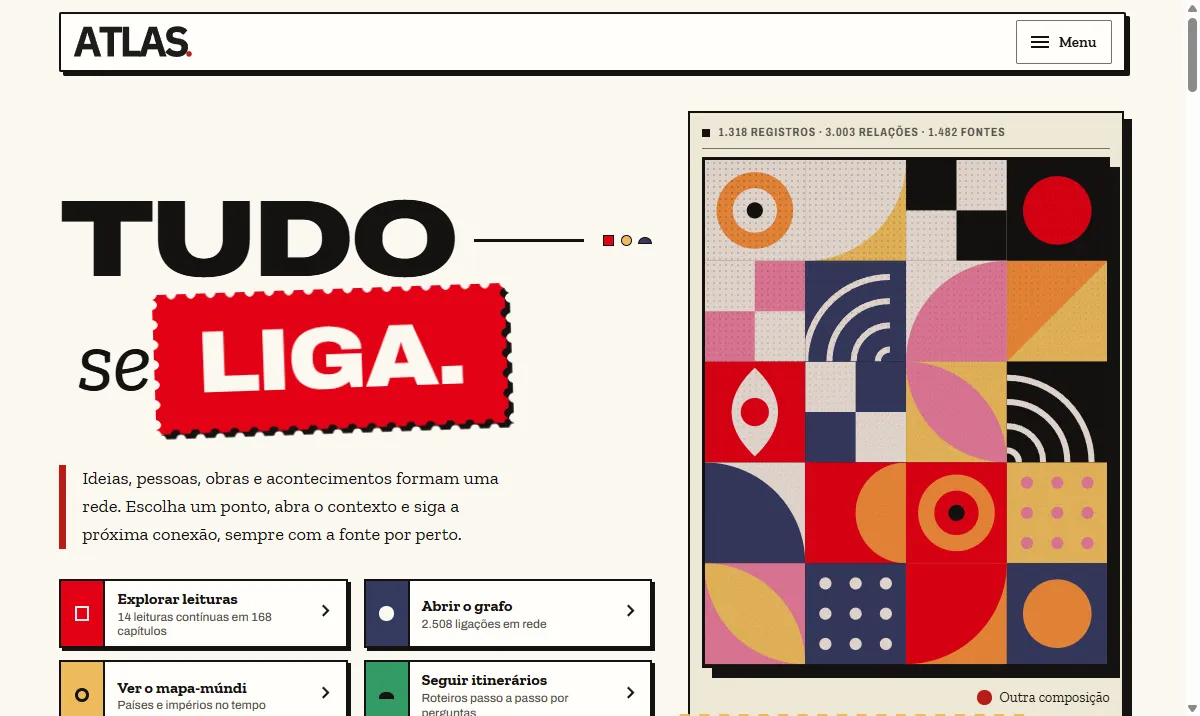
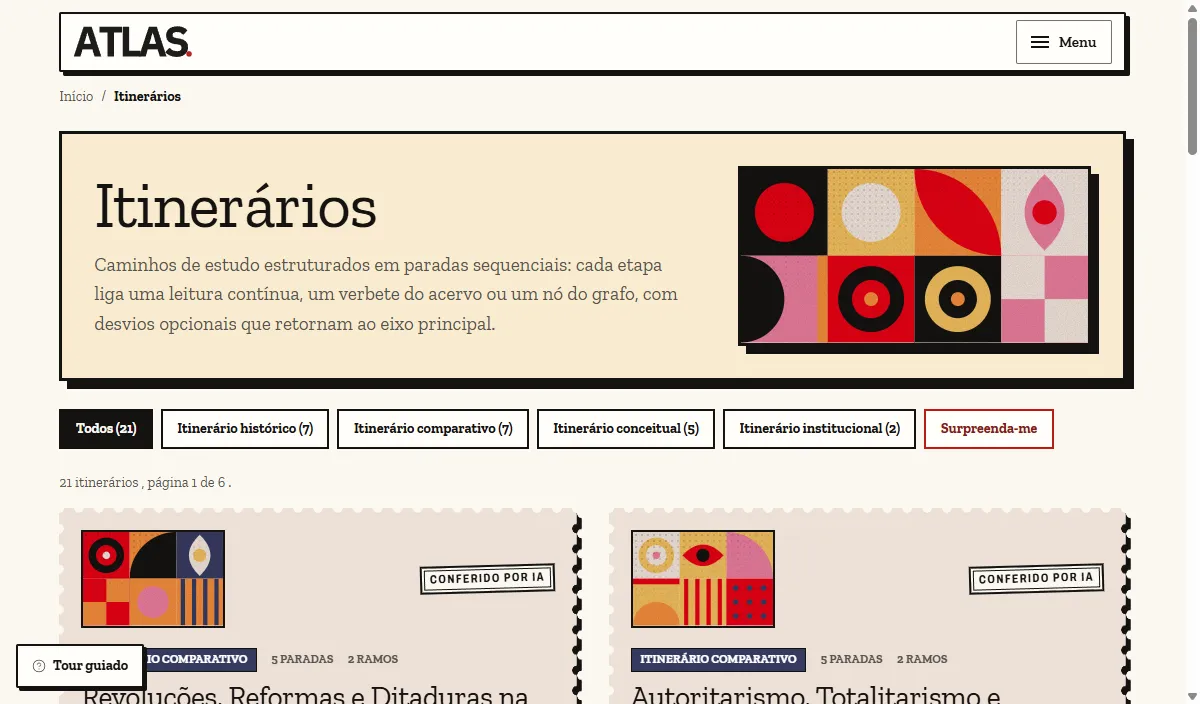
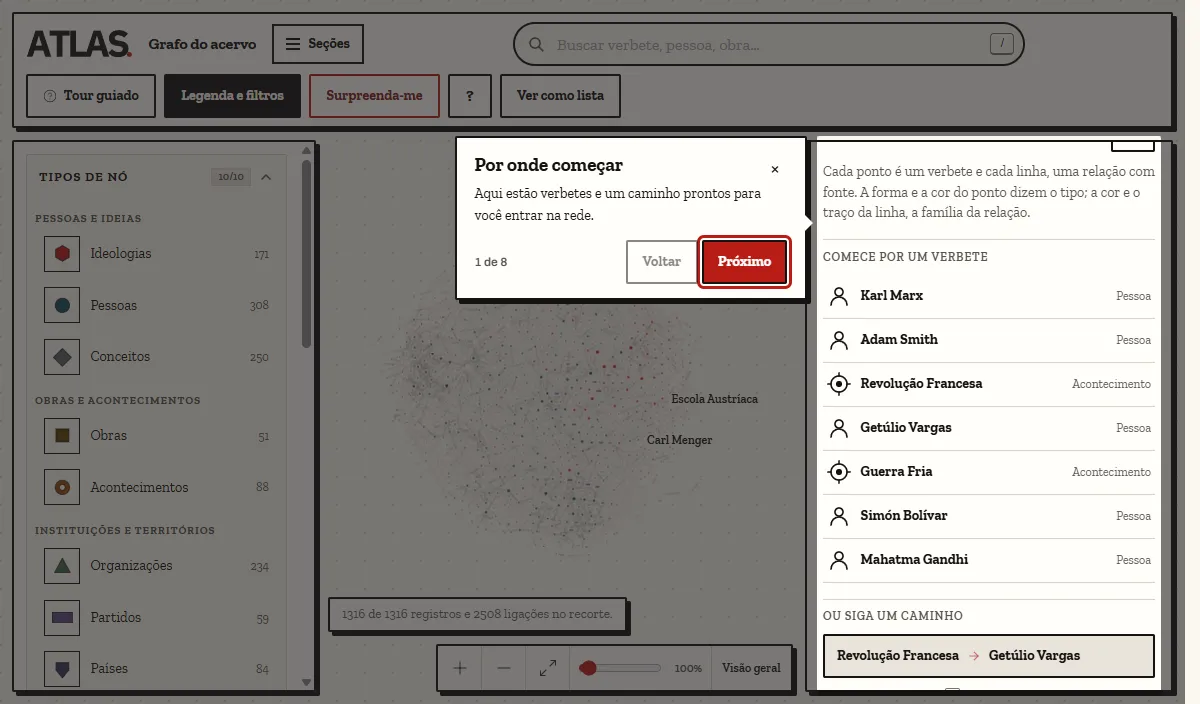
Counted from release v0.8.0 published on 22 Nov 2026.
PROBLEMOpinion presented as fact.
Encyclopedic text tends to blend documented fact, attributed thesis and interpretation in the same paragraph. Knowledge graphs that keep them apart are rarely readable by non-specialists. ATLAS tries to do both: a reading experience for students and curious readers, backed by data a developer can audit.
EPISTEMIC MODELEvery claim says what kind of claim it is.
Claims are typed records with their own citation, validated by a Zod schema. Known gaps are declared at chapter level instead of being filled with generic text.
- 8,278 documented facts
- 1,544 contested claims
- 1,171 attributed theses
- 1,153 interpretations
ARCHITECTUREStatic-first and content-addressed.
Versioned JSON content is validated, compiled into a manifest, search index, adjacency, layouts and self-contained reading packages, and published to Cloudflare R2 as immutable objects named by their SHA-256. The Angular 21 build fetches the pinned release, checks size and hash, and prerenders all 1,413 published routes. There is no API at reading time.
- Zod checks IDs, slugs, references and licenses before anything compiles
- Signals, standalone components and TransferState to avoid double downloads during hydration
- A custom ESLint rule enforces feature boundaries and blocks import cycles
AI WITH GUARDRAILSA person publishes what the model drafts.
Ingestion reads reproducible Wikipedia, Wikidata and Commons snapshots. LLM-assisted extraction keeps only quotes found verbatim in the source, a local RAG pipeline (bge-m3 embeddings and a reranker) suggests relations as drafts, and AI review is labelled as such. Publishing stays a human decision.
QUALITYTested in CI.
Vitest for components, Playwright for user journeys, axe for automated accessibility and layout stability checks, and node --test for the content and ingestion scripts. All of it runs in CI alongside lint, typecheck, build and link checks.
LIMITSWhat is not done yet.
No claim has completed human review yet, and the site says so. Coverage is uneven across traditions, and while the interface is now bilingual (PT-BR/EN), the underlying collection is still mostly in Portuguese. These limits are shown in the product instead of being hidden behind the numbers.